
How Far Will Australian Property Prices Fall?
How Far Will Australian Property Prices Fall?
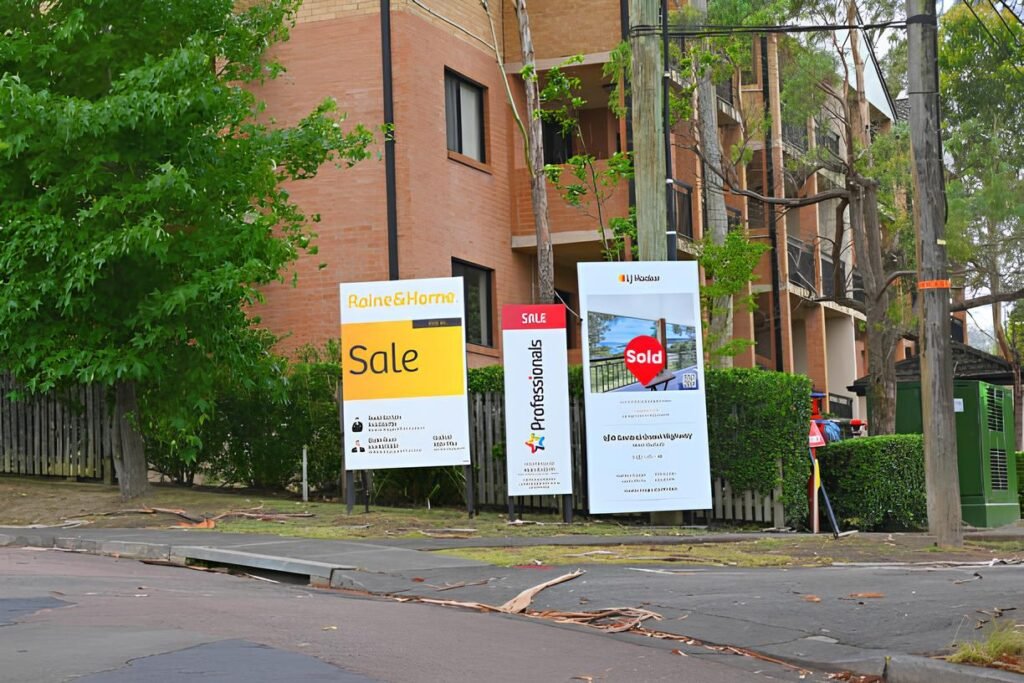
Australian Property Prices Are Falling. Here Is How Far They Have to Go.
With clearance rates at pandemic-era lows, listings surging and a sweeping investor tax reform now law, the next 18 months will separate the markets that hold from the ones that don’t.
Half of every home taken to auction in Australia failed to sell last weekend.
Not in one struggling suburb. Nationally. The combined clearance rate fell to 47.4% – a number not recorded since the pandemic lockdowns of April 2020. It has been below 60% for ten of the past twelve weeks.
The prices are already moving. Sydney is down 2.1% from its November peak – a median dwelling value that has slipped to $1,282,020. Melbourne has shed 3.2% from its 2022 high, hovering at a median of $995,000, close enough to the $1 million threshold that agents are now openly discussing when, not whether, it breaks.
The question on every owner’s mind is the same: how much further?
The honest answer is that it depends on which city you are in, what you own, and which of three scenarios plays out before Christmas. What the data shows right now – in listing volumes, selling times, and vendor discounting – is a market where the pressure is building faster than most people realise, and where the spring selling season in September and October will be the most important test of buyer depth in four years.
Here is what that data says, city by city.

If you’re buying a home or investment property, making that decision without an independent, objective view is a risk many buyers underestimate. Before you make an offer, get an independent analysis of the property you are buying. Analysts with extensive industry experience provide professional insight specific to your property purchase.
The professional report includes price guidance, rental returns, growth potential, and a clear buy-or-don’t-buy recommendation, with the reasoning laid out behind the numbers. Reports are typically delivered within one hour.
Sydney: Stock Is Piling Up and Homes Are Taking Longer to Move
There are currently around 36,000 properties listed for sale across greater Sydney – up 11.6% on this time last year, and sitting above the five-year average for the first time in the current cycle. New listings alone jumped 18.6% in May compared to a year earlier.
The problem is not that sellers have suddenly flooded the market. It is that buyers have slowed down. Homes that would have sold in a fortnight last year are now sitting. The national median selling time, which was 27 days as recently as late 2025, has been rising through 2026 as demand softens. In Sydney specifically, where auction volumes are tracking above 1,000 homes per week and clearance rates have been stuck in the low-to-mid 50s, properties are increasingly passing in and returning to market as private treaty listings – adding to the visible stock pile.
Transaction volumes tell the same story: estimated sales in Sydney are down 17% year on year. That is not a blip. It is buyers stepping back.
For sellers, the discounting pressure is already real. The median vendor discount across the combined capitals has widened from 3.1% to 3.3% since January. On a $1.4 million Sydney home – roughly the current auction median – that additional 0.2% represents roughly $28,000 more left on the table compared to conditions at the start of the year. And that is the median. Compromised properties in investor-heavy precincts are being discounted harder.
Melbourne: Three Tax Hits, One Market, and a Median Edging Toward $900,000
Melbourne’s situation is the most acute in the country, and the data on the ground reflects it.
Total listings across Melbourne are up 12.1% year on year – one of the largest annual increases of any capital. New listings jumped 14.3% in May alone. Clearance rates have been running between 47.8% and 59% in recent weeks, with the most recent reading of 55.9% still sitting well below the 71% recorded in the same week last year. At an auction median of $954,000 in the week ending 20 June – down from $992,500 the previous week – the psychological floor of $1 million is within reach.
What makes Melbourne different to every other capital is that its investors are carrying a cost burden that exists nowhere else. Victorian landlords already face the state’s land tax surcharge and additional property duty – both introduced in recent years and still biting. The federal negative gearing and CGT changes, which passed Parliament on 25 June 2026, add a third layer. An established Melbourne investment property purchased this week will carry all three simultaneously from July 2027. The investment case for Melbourne established housing has not just softened. It has been structurally repriced.
“The investment case for Melbourne established housing has not just softened. It has been structurally repriced.”
The consequence is already visible. Estimated Melbourne sales are down 14.2% on a year ago. Investor activity at auctions has thinned to the point where agents describe most campaigns as owner-occupier dominated. Older stock – listings that have been sitting through multiple campaigns without selling – rose 9% in May and is accumulating faster than it is clearing.
Brisbane: Still Rising, But Slowing Fast
Brisbane is the capital most likely to confuse people right now, because the headline numbers are still positive while the ground conditions are shifting quickly.
Total listings in Brisbane jumped 18.5% in May – the largest monthly surge of any capital. That lifted stock to 16,973 properties, though it remains marginally below year-ago levels, which is what keeps Brisbane’s overall position different to Sydney and Melbourne. The rental vacancy rate is 1.0%, among the tightest in the country. Interstate migration continues. Annual dwelling values are up 19.1%. These are genuine structural supports.
But they are masking a real change in conditions. The minimum income required to service a lower-quartile Brisbane house has risen by $14,500 since January – just five months – as three rate hikes pushed mortgage repayments higher against prices that had already run 19% in a year. Asking prices fell 1% in May. The auction market, never dominant in Brisbane, is running clearance rates so low that the headline figure – around 25% to 30% – largely reflects thin volumes and methodology rather than panic. The real transaction story is in private treaty, where selling times are beginning to rise from what had been extraordinary lows. Brisbane properties were selling in 21 days at the start of 2026. That number is now moving in the wrong direction.
What the forecasts say: Under the base case, Brisbane eases 2% to 4%. That would still leave it well ahead of where it was two years ago. In the downside scenario – further rate hikes and a national confidence shock – the fall extends to 5% to 8%.
Perth: The Tightest Market in the Country – But No Longer Untouchable
Perth has been the standout performer of the current cycle and remains the most fundamentally supported capital in Australia.
The numbers are stark. Total listings sit at 15,230 properties – still 9.8% below year-ago levels despite a 16% monthly surge in May. The rental vacancy rate is 0.7%, the lowest of any major capital. Monthly value growth was still running at 1.5% in May. Annual growth stands at 25.8%.
But Perth is no longer the frictionless seller’s market it was. The 16% jump in listings in May, combined with a 7.4% rise in new listings, is the beginning of normalisation – not a crisis, but a signal that the extreme scarcity conditions of 2024 and early 2025 are easing. Selling times, while still short, are starting to lengthen from the near-single-digit days recorded at the peak of the boom.
The honest risk for Perth owners is not that the market collapses. It is that a city that delivered 91% five-year growth has limited room to absorb continued rate pressure without slowing sharply. The AUKUS defence investment provides a genuine economic floor. But buyers who paid 2024 peak prices in the outer corridors are now watching those same areas produce the first signs of stock accumulation.
What the forecasts say: Under the base case, Perth holds or adds modestly – flat to up 2%. Under the downside scenario, 3% to 6% falls are plausible. For context: a 6% fall in Perth still leaves owners materially ahead of where they were in 2023.
Adelaide: The Quietest Resilience in the Country
Adelaide’s market data is the calmest of any capital – and for once, the calm reflects genuine conditions rather than thin volumes.
Listings rose 14.1% in May, but from an extremely low base. Auction clearance rates are holding above 60%, the only major capital consistently above that level. Annual growth is running at a pace that puts Adelaide ahead of Sydney and Melbourne on a one-year basis.
The risk for Adelaide is that it has run fast and now faces the same affordability headwind as everyone else, without the population growth buffer of Brisbane or the defence investment story of Perth. Asking prices fell 1.7% in May – the largest monthly decline of any capital. That is not yet a trend, but it is worth watching.
What the forecasts say: Flat to up 2% in the base case. A 2% to 4% correction in the downside scenario. Adelaide has the least downside of the major capitals.
Canberra: The Most Overlooked Soft Market
Canberra rarely gets the analysis it deserves, and the data suggests the market deserves more attention right now.
Listings jumped 12.1% in May, and distressed listings – properties listed by vendors under financial pressure – are already 38.2% above year-ago levels. That ACT distressed listing figure is the largest annual increase of any jurisdiction in the country. It does not yet represent a wave of forced selling. But it is an early warning signal that the combination of above-average property prices, a cautious public sector workforce, minimal investor depth, and full rate sensitivity is producing stress faster than in any other capital.
Selling times in Canberra were already among the longest nationally before the current slowdown – homes were taking around 37 days to sell, the slowest of any capital. That number will have moved higher through mid-2026.
What the forecasts say: Under the base case, Canberra falls 4% to 7%. Under the downside scenario, 8% to 12% – the sharpest proportional fall of any capital outside of a crisis.
About to make an offer? Get an independent PropCred Pre-Purchase Report with price guidance, rental returns and a clear buy-or-don’t-buy recommendation.
The Spring Stress Test: What September Will Reveal
The most important number to watch between now and December is not the RBA cash rate. It is the national listings count in the first week of October.
Total national property listings hit 258,803 dwellings in May – a 10.4% monthly rise and the first time in over a year that national stock moved into positive annual territory. That is the current baseline entering winter, a season that naturally suppresses new listings as vendors pull back.
The critical question is what happens when those vendors return in spring. If September brings a fresh wave of listings landing on top of the properties that failed to clear through winter – and at current clearance rates, a significant proportion of what is listed between now and August will not clear – the market faces an absorption test it has not seen since 2022.
Old listings – properties that have been on the market for more than 30 days – already rose 10.5% nationally in May, with Sydney up 10.2%, Melbourne up 9.0%, and Canberra up 13.4%. That accumulation of stale stock is already changing buyer behaviour. When buyers have more to compare, they compare for longer, negotiate harder, and walk away more often. The fear of missing out is gone. What has replaced it, particularly in Sydney, is a fear of overpaying.
- Above 60% in second week of September: Soft landing is in play. Buyer confidence has returned faster than expected.
- Between 53% and 60%: Base case is holding. Orderly correction continues at the pace already established.
- Below 53%: Downside scenario becomes the working assumption. Motivated selling accelerates and spring correction deepens faster than monthly indices will show for six to eight weeks.
The Three Scenarios, In Full
The range of outcomes over the next 18 months is genuinely wide – and the gap between the base case and the downside is not a marginal difference. On a $1.5 million Sydney home, the difference between Scenario 1 and Scenario 2 is approximately $90,000. On a $900,000 Melbourne house, it is the difference between a correction you can absorb and one that puts you underwater against your purchase price.
All price figures below represent the fall from current levels – not from peak. Sydney and Melbourne have already fallen. These scenarios describe what happens next.
Scenario 1: Orderly Correction – Probability 45%
What this looks like: The RBA holds the cash rate at 4.35% through late 2026, then begins cutting in early 2027 – most likely February or May – reaching approximately 3.85% by the end of next year. Investor selling of post-budget established properties is gradual, spread across 12 to 18 months rather than concentrated into a single season. The spring listing wave arrives in September but is absorbed at lower prices without a demand collapse. Unemployment stays below 5%. Mortgage arrears tick upward in outer corridors but do not reach levels that force large-scale distressed selling.
Why this is the most likely outcome: The grandfathering provisions in the negative gearing reform are doing real work here. Investors who bought established properties before 12 May 2026 – the vast majority of Australia’s 2.2 million investment property owners – have no immediate reason to sell. Their arrangements are unchanged. That limits the near-term supply surge from investor exits. Meanwhile, owner-occupier demand, while cautious, has not collapsed. First-home buyer activity has actually risen following the expansion of the 5% deposit guarantee scheme, providing a partial offset to investor retreat particularly in the sub-$800,000 segment. The RBA’s June hold – and its explicit acknowledgement that financial conditions are now tighter – signals a board that is watching the housing data and does not want to tip a correction into something deeper.
What drives this scenario: Inflation continues decelerating through Q3 2026, giving the RBA cover to pause. The August and September board meetings both produce holds. Clearance rates stabilise in the high 50s heading into spring rather than drifting lower. The spring listings wave is normal seasonally rather than elevated, because winter stock clears adequately. Consumer confidence stabilises as rate expectations shift from “more hikes” to “eventual cuts.”
What would break this scenario: A further inflation surprise – particularly from services inflation or energy prices linked to the Middle East conflict – forces the RBA to hike in August. Or clearance rates fail to recover from the sub-50% readings of late June, creating a loss of vendor confidence that floods spring with motivated sellers. Either event shifts the probability mass toward Scenario 2.
| City | Houses | Units |
|---|---|---|
| Sydney | −5% to −8% | −2% to −4% |
| Melbourne | −7% to −10% | −3% to −5% |
| Brisbane | −2% to −4% | 0% to +3% |
| Adelaide | 0% to +2% | +1% to +4% |
| Perth | −1% to +2% | +1% to +3% |
| Canberra | −4% to −7% | −2% to −4% |
Scenario 2: Extended Pressure – Probability 35%
What this looks like: The RBA delivers one or two further 25 basis point hikes – most likely at the 5 August and 16 September meetings – taking the cash rate to 4.60% or 4.85%. Consumer confidence, already near 50-year lows on the ANZ-Roy Morgan index, deteriorates further as mortgage repayments rise again. The spring selling season arrives with national listings well above five-year averages, but buyer pools have not recovered. Clearance rates remain below 55% nationally through October. Investors who purchased established properties after 12 May – now facing both higher carrying costs and the looming quarantine of their negative gearing losses – begin selling in volume through Q4 2026, adding supply to a market already digesting elevated stock. Distressed listings, already up 5.1% nationally in May and 38.2% above year-ago in the ACT, begin rising across all states.
Why this scenario carries more risk than it did six months ago: Three things have shifted since the start of 2026 that make this scenario more probable than it would have appeared in January. First, the RBA has already demonstrated willingness to hike three times in five months despite clear evidence of housing market softening – it is prioritising inflation over housing stability. Second, the tax reform has created a new category of motivated seller that did not previously exist: investors who purchased after budget night and now face a deteriorating after-tax return on a fixed timetable. Third, listing volumes have already made their first significant move upward in May, with old stock accumulating faster than it is clearing in Sydney, Melbourne and Canberra. The pipeline for spring is building from a higher base than in any recent year.
What drives this scenario: The RBA hikes in August, citing sticky underlying inflation – currently at 3.6%, above the 2%–3% target band. Westpac’s forecast – another hike in September to 4.85% – proves correct. Borrowing capacity falls further, removing another tranche of marginal buyers just as spring listings arrive. Meanwhile, investors who bought established properties in May and June 2026 run cashflow models showing their negatively geared positions become materially harder to carry from July 2027. Some choose to exit before then. Their selling hits a market already absorbing elevated spring supply.
What could prevent this scenario: A faster-than-expected improvement in monthly inflation data – particularly trimmed mean CPI – gives the RBA a reason to hold in August. If clearance rates recover to the high 50s in July and August, that itself becomes a data point that argues against a further hike. The grandfathering protections also act as a natural buffer: if existing investors choose to hold – knowing their arrangements are protected as long as they do – the investor supply wave is smaller and more manageable than feared.
| City | Houses | Units |
|---|---|---|
| Sydney | −10% to −14% | −5% to −8% |
| Melbourne | −12% to −16% | −6% to −9% |
| Brisbane | −5% to −8% | −1% to +1% |
| Adelaide | −2% to −4% | 0% to +2% |
| Perth | −3% to −6% | −1% to +2% |
| Canberra | −8% to −12% | −4% to −7% |
Scenario 3: Soft Landing – Probability 20%
What this looks like: The RBA pivots earlier than expected – possibly signalling cuts as early as Q4 2026 – in response to a faster-than-expected decline in underlying inflation, or a sharper rise in unemployment that tips the balance of the board’s dual mandate toward growth. Buyer confidence recovers quickly, as it historically does in Sydney and Melbourne when rate expectations shift. The spring selling season arrives with elevated listings but encounters a buyer pool reinvigorated by the pivot signal. Clearance rates recover to the mid-to-high 60s by October. First-home buyers, whose activity has already been lifted by the expanded 5% deposit guarantee, absorb the lower end of the market. Investors who were weighing the tax reform recalculate: if rates are falling and yields are rising – gross rental yields across the combined capitals are already at their highest level since mid-2025, at 3.45% – holding makes more sense than selling. The investor supply wave does not materialise.
Why this scenario is real but requires a specific sequence of events: The soft landing is not wishful thinking – it is what happens when the rate cycle turns faster than the consensus expects, in a market where supply constraints are still structural and population growth is still real. Every major bank forecasts eventual rate cuts. The question is timing. Sydney and Melbourne are historically the most rate-sensitive capitals in the country – they fall hardest in tightening cycles and recover fastest when the cycle turns. That same sensitivity that has driven the current correction becomes its own recovery mechanism if the RBA moves early.
What drives this scenario: Monthly CPI data for Q2 2026 – due in late July – comes in materially below the RBA’s projections, driven by a faster pass-through of earlier rate hikes into consumer spending and housing. The June quarter employment data shows unemployment rising toward 4.5% faster than expected. The RBA’s August statement signals a shift in tone from “further tightening may be necessary” to “we are monitoring carefully.” Markets reprice rate cuts from mid-2027 to late 2026. Clearance rates recover quickly from the sub-50% readings of June.
What prevents this scenario: Inflation proves stickier than the models suggest – particularly services inflation and insurance costs, which have been running hot independently of global commodity movements. The Middle East conflict continues passing through to fuel and goods prices. The RBA finds itself unable to pivot without risking a re-acceleration of price pressures, and the “cuts in late 2026” expectation gets pushed back to mid-2027. In that case, the soft landing window closes and the market drifts into Scenario 1 or Scenario 2.
| City | Houses | Units |
|---|---|---|
| Sydney | −2% to −4% | 0% to +2% |
| Melbourne | −3% to −5% | −1% to +2% |
| Brisbane | +1% to +4% | +3% to +6% |
| Adelaide | +3% to +6% | +4% to +7% |
| Perth | +2% to +5% | +3% to +6% |
| Canberra | −2% to −4% | 0% to +2% |
What Buyers and Sellers Should Do With This
For buyers, the negotiating conditions are the best since 2019 – but they are not uniform. A vendor discounting 5% in a Sydney outer-western suburb is a different opportunity to a vendor who has held firm in an inner-ring suburb where owner-occupier demand has not moved. The data tells you which camp a property is in. Listings history, selling time, the number of prior price reductions, and the comparable sales from the past 90 days – not 12 months – are what matter now. Last year’s comparable sales are a vendor’s fantasy, not a price guide.
For sellers, the honest message is that the spring selling season is not the reprieve many are hoping for. More stock arriving means more competition for the same cautious pool of buyers. Vendors who enter spring with realistic pricing, strong presentation and flexibility on method of sale will outperform those who wait for conditions to improve. The data does not support waiting. Total national listings are already 10.4% above where they were a month ago. That supply trend has one direction between now and October.
The market is not going to crash. But it is sorting – city by city, street by street, property by property. The headline number, wherever it lands, will be the average of a wide range of outcomes. Understanding which side of that line your property sits on is worth more than any national forecast.

Leave a Reply