
What’s Really Driving the Housing Price Surge in Perth and Brisbane?
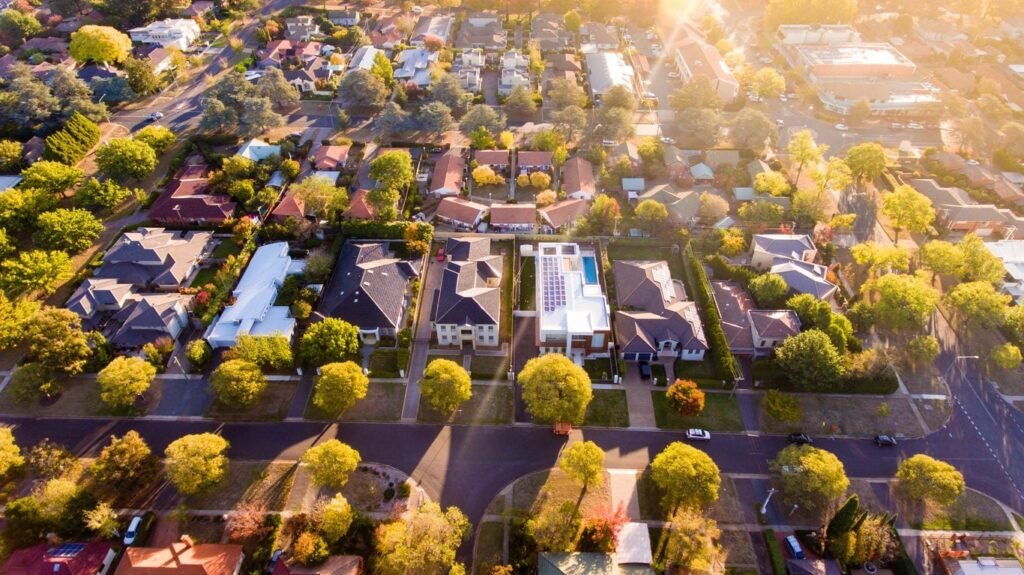
On a quiet Saturday morning in Craigieburn, 27 kilometres north of Melbourne’s CBD, Tom and Emily Harris unlocked the front door of their first home – a four-bedroom house they purchased late last year for $692,000.
Both are in their early thirties. Tom works in logistics. Emily is an early-childhood educator. They rented in Melbourne’s inner north for almost a decade and assumed home ownership would eventually mean either leaving the city or taking on unsustainable debt.
“Everyone kept telling us Melbourne was becoming impossible,” Emily said. “But when we actually looked suburb by suburb, we realised there were still options.”
Their experience now stands in sharp contrast to what many buyers face in Sydney, where dwelling values sit near record highs and first-home buyers are increasingly absent from the market.
New data confirms this divergence is widening again. Australia does not simply have a two-speed housing market – it is increasingly operating under two different housing outcomes, driven by affordability, supply and policy settings.
If you’re buying a home, making that decision without an independent, objective view is a risk many buyer’s underestimate. Our property analysts with extensive industry experience provide professional insight specific to your property purchase. The professional investment deck prepared by our analyst team includes price guidance, rental returns, growth potential, and clear buy–or–don’t-buy recommendations, with the reasoning laid out behind the numbers.
Before you make an offer, order PropCred Home Buyers Report (for only $39) to get an independent analysis of your property purchase. Reports are typically delivered within one hour, and always within four hours.
Mid-sized capitals pull away again
Fresh figures from Cotality and PropTrack show a growing gulf between Australia’s strongest performing capital cities and the softer conditions persisting in Sydney and Melbourne.
Perth, Brisbane and Adelaide have firmly returned to boom-like conditions, while Australia’s two largest markets are barely registering growth.
In January, national dwelling values rose modestly, but that headline masks wide variation:
- Perth continues to lead the country, following a 13.3% rise in median house prices in 2025
- Brisbane posted a monthly gain of around 1.6%, easing slightly from late-2025 peaks
- Adelaide recorded a still-robust 1.2% monthly increase
By contrast, Sydney and Melbourne only just clawed their way back into positive territory.
Melbourne dwelling values remain below their March 2022 peak, while Sydney prices sit fractionally under their late-2025 high point.
The re-emergence of this hierarchy marks a reversal of the brief convergence seen late last year – and suggests the two-speed dynamic is becoming entrenched once again.
Low listings, high pressure – but uneven outcomes
At the national level, the key driver remains a severe shortage of homes for sale.
Cotality estimates that advertised listings are around 19% lower than a year ago and roughly 25% below the five-year average, even as buyer demand remains above long-term norms.
However, the impact of that shortage is not uniform.
In more affordable capitals such as Perth, Brisbane and Adelaide, low listings are translating directly into rapid price growth. In Sydney and Melbourne, higher absolute prices and greater buyer choice are muting the effect.
The strongest gains are occurring at the lower end of the market.
Across the combined capitals, lower-quartile house values rose more than four times faster than upper-quartile values in January – a clear signal that competition is most intense where affordability still exists.
“This is where first-home buyers, investors and increasingly mainstream demand are all colliding,” Cotality research director Tim Lawless noted recently.
Perth’s boom broadens – not just blue-chip anymore
Nowhere is the divergence more visible than in Perth.
The strength of the Western Australian market is no longer confined to traditional prestige suburbs. In 2025 alone, 32 suburbs joined Perth’s million-dollar median house price club, taking the total to 126 suburbs.
New entrants included Wattleup, Canning Vale, Jandakot, Darch, Hilton and Orange Grove – areas once considered fringe or industrial that are now firmly in demand.
REIWA president Suzanne Brown described the scale of the shift as unusual.
“Typically we only see a handful of new entrants each year,” she said. “But another year of strong growth pushed prices higher across a very broad range of suburbs.”
That breadth is both a sign of strength and a reminder of Perth’s historical cyclicality. Economists caution that Perth remains more sensitive to employment conditions, population flows and credit settings than east-coast capitals, and that part of the recent surge reflects long-term catch-up rather than a permanent repricing.
Sydney: supply constraints meet affordability ceilings
Sydney’s challenge is of a different nature.
Prices remain elevated not because demand is weak, but because supply remains structurally constrained.
Inner-city and eastern suburbs are largely built out. To the east lies the ocean; to the west, national parks and the Blue Mountains. What remains is densification – slow, politically complex and expensive.
A recent DWS Research report estimates that Greater Sydney will require around 140,000 additional dwellings by mid-2029 to meet excess demand and population growth.
Much of that burden is falling on Western Sydney, with local government areas such as Blacktown, Liverpool, Parramatta and The Hills expected to absorb roughly half of metropolitan population growth over the next five years.
Yet more people does not automatically mean stronger capital growth.
Infrastructure timing, income growth and the scale of new supply will all determine whether demand translates into sustained price pressure – particularly in outer and middle-ring suburbs.
For now, Sydney appears to be running into an affordability ceiling rather than accelerating into another boom.
Melbourne’s slower growth is not an accident
Melbourne’s underperformance relative to other capitals is often framed as a weakness. In reality, it reflects a different mix of supply and policy choices.
Despite record migration and population growth comparable to Sydney’s, Melbourne has seen far more housing delivered per capita over the past decade.
Growth corridors in Wyndham, Casey, Hume and Whittlesea have added significant new stock, while medium-density development has expanded across established suburbs such as Preston, Bentleigh East, Coburg and Brunswick West.
At the same time, Victoria implemented higher land taxes and investor surcharges that dampened speculative demand.
The result has been slower price growth – and materially better affordability relative to incomes.
KPMG’s latest residential outlook forecasts moderate growth in Melbourne in 2026 – around 6.8% for houses and 7.3% for units – driven primarily by owner-occupier demand rather than leverage-fuelled speculation.
“Melbourne’s recovery is being led by genuine underlying demand,” said KPMG chief economist Dr Brendan Rynne, “with less risk of household balance sheets becoming overstretched.”
Regional markets: growth without depth?
Regional Australia has continued to outperform the capitals in aggregate, with values rising around 1.0% in January, compared with 0.7% across combined capitals.
But here too, the picture is uneven.
In many regional centres, price gains were driven less by local income growth than by pandemic-era lifestyle shifts, investor demand and ultra-low interest rates. As borrowing costs normalise, markets that lack employment depth or wage growth are increasingly vulnerable to stagnation or reversal.
The lesson is that not all price growth is created equal.
Interest rates loom over 2026
Much of the price growth recorded in 2025 was supported by earlier rate cuts. However, inflation surprises in the second half of last year have brought the prospect of renewed tightening back into focus.
Even modest rate increases have an outsized impact on borrowing capacity – particularly in high-priced markets such as Sydney.
While unemployment remains low and housing supply constrained, analysts expect rate settings to play a far greater role in shaping outcomes through 2026 than they did last year.
A market split by affordability, not momentum
The widening divide in Australia’s housing market is not simply about which cities are “hot” and which are not.
It is increasingly about where housing remains accessible.
Mid-sized capitals and lower-priced segments continue to do the heavy lifting for national growth. Sydney and Melbourne, by contrast, are constrained by affordability, supply limits and policy trade-offs.
For buyers like Tom and Emily in Craigieburn, that difference is tangible.
For policymakers, it underscores a harder truth:
housing outcomes are shaped as much by supply and policy choices as by population growth.
Australia’s property market may be two-speed – but the forces behind it are far more complex than a single national headline suggests.
Leave a Reply